Electric fence setup in Mackay: what the sources cover
Earthing is a recurring theme in the sources we read, and it is why this guide spends most of its time on it. We read a regional fact sheet, a regional pig fencing sheet, one manufacturer's advice page and a New South Wales government publication listing. Between them they cover common faults, dry conditions, fire days and where to read more.
They leave out a lot. No source we read says what the wet season does to an electric fence in the Mackay region. We found no Queensland electrical safety rule for electric fences. We found no Mackay or Isaac rule on them either. So this page says what it can, says where it stops, and turns the rest into questions for the contractor.
The parts, and the faults the fact sheet lists
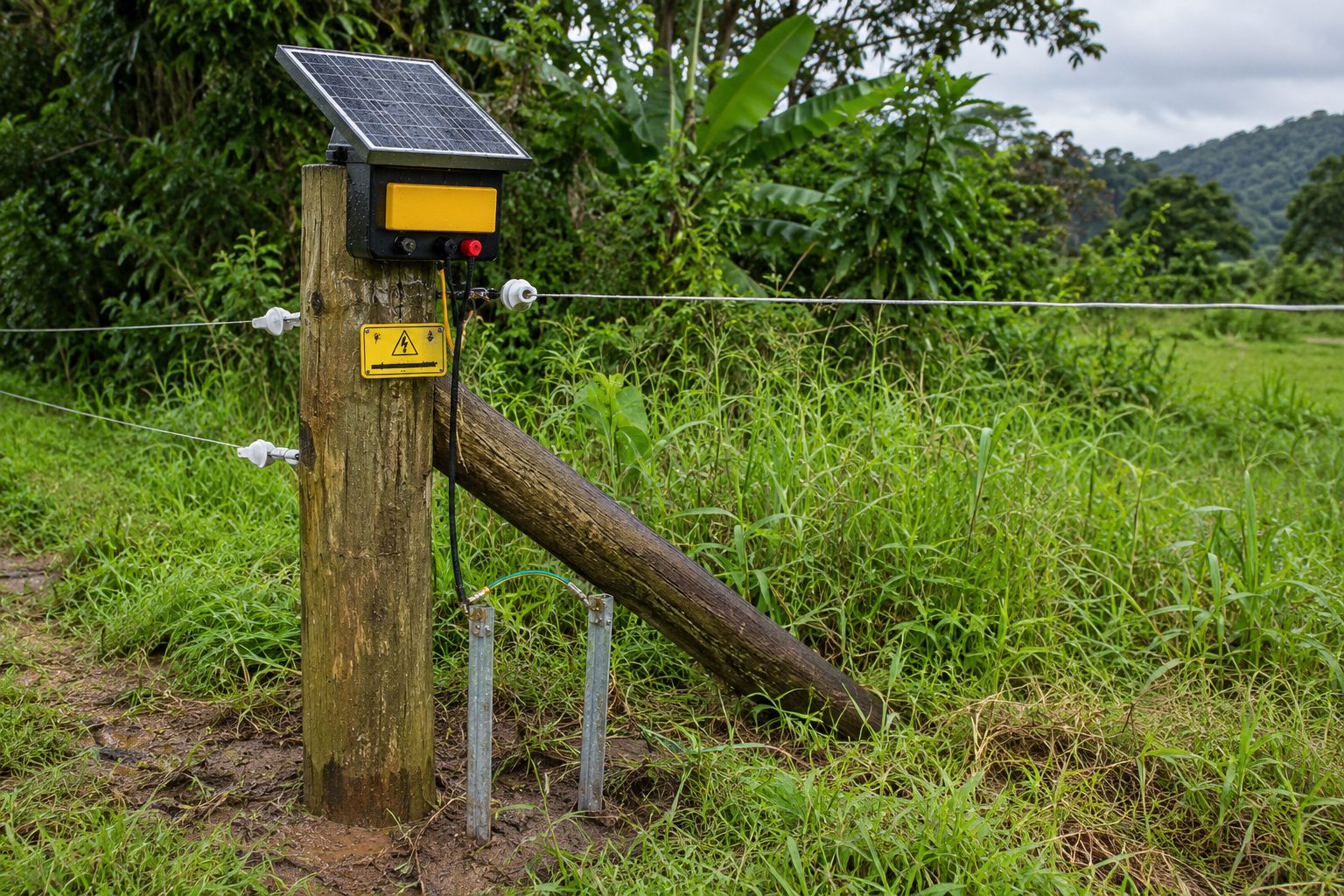
An electric fence has an energiser, wire held on insulators, and an earth system. The regional fact sheet is about fence selection, and it covers temporary electric fencing in particular (a regional fence selection fact sheet). It says temporary electric fencing is low cost and suits rotational or cell grazing, but that it "requires constant monitoring and maintenance to maintain voltage, tension and prevent breaches". It lists the common faults:
| Common fault | What to ask the contractor |
|---|---|
| Vegetation touching the wires | How will the line be kept clear, and who does it after heavy rain? |
| Broken wires or broken insulators | Which insulators are used, and what spares are left with you? |
| Poor earthing | Where is the earth system, how is it built, and how can I check it? |
| Poor connections or poor insulation | How are joins made, and how are gates and crossings insulated? |
The sheet is general information and does not set mandatory standards. Ask the contractor to explain in plain words how your fence is wired and where the current returns.
Dry spells and earthing: what the manufacturer says
One manufacturer's page, which we label as manufacturer advice, says dry conditions make the earth system less effective, with higher fence voltage, lower load and weaker shocks (one manufacturer's page on electric fences in dry conditions). It recommends a return earth design for permanent fences in Australia, and says induction in non-live wires can be fixed by earthing. We do not name the manufacturer, and we do not recommend any product.
The page is general advice, not a rule, and it is not written for the Mackay region. At the Mackay M.O. station, with a record from 1959, the mean annual rainfall is 1,597.3 mm, and about 12 per cent of it, 184.9 mm, falls from June to October (Bureau of Meteorology, Mackay M.O.). What a dry spell does to an earth in Mackay ground is a question for the contractor. Ask how the earth system on your fence is built to cope, and whether the plan includes a return earth.
The wet season: what no source tells us
About 75 per cent of the rain falls from December to April, 1,197.2 mm of the annual 1,597.3 mm at the same station. So the wet months are the other test of an electric fence, with regrowth along the line, saturated ground and flooding. We found no source that says what these do to an electric fence in the Mackay region, so we make no claim. What we can say from the fact sheet is that vegetation touching wires is a common fault, so ask how the line will be kept clear and who checks it.
If the line crosses a drain or creek, a flood can break wires and carry debris, as the storm and flood repair page describes. The seasons guide has the rainfall by month.
Fire days and switching off
The manufacturer's page suggests considering switching the energiser off on days of severe or higher fire risk. That is manufacturer advice, not a Queensland rule. We found no fire-ban rule for fence work or electric fences in the Mackay, Isaac or Whitsunday areas. The one notice we read was a local fire ban in the Whitsunday areas only, and it did not mention fencing. Check current Queensland Fire Department notices for your area, and ask the contractor what they do on fire days.
Electrifying an existing fence, and pigs
A regional pig exclusion sheet describes electrifying an existing stock fence, for example with outriggers (a regional pig exclusion fact sheet). It adds that "Continuous maintenance is needed to repair breaches made in the fence by pigs or other animals, fallen timber and floods". The exclusion fencing page sets out the regional designs. For stock, see the cattle and farm fencing page, and for horse paddocks the horse and lifestyle block page.
Where to read more, and what we could not confirm
The New South Wales Department of Primary Industries and Regional Development publishes an Electric Fencing AgGuide, and the listing we read covers how electric fences work, materials and construction (the NSW Electric Fencing AgGuide listing). It is a New South Wales publication, and the listing has no technical figures, so it is a handbook to read, not a Queensland rule.
Another Queensland council's fence sheet cites a standard for electric fences in urban areas. We could not confirm that standard's current status, it belongs to that council, and it is not a Mackay or Isaac rule. Ask the council that covers your land, and ask the contractor which standard they build to.
When you are ready, send your town, the animals the fence must hold and a photo of the line, and say if the fence is to be electric.
What this page cannot do
This page cannot tell you what the wet season does to an electric fence in the Mackay region, whether a particular earth design will work on your ground, or which electrical rules apply. We found no Queensland electrical safety rule for electric fences and no Mackay or Isaac rule, and the manufacturer advice is general. It does not recommend a product. We are a referral service: we pass your enquiry to local contractors, who design and build the fence and are responsible for holding any licence or registration that applies.
Check the current rules before you rely on this
This page describes what a regional fact sheet, one manufacturer's advice page, a New South Wales publication listing and the Bureau of Meteorology say that bears on electric fencing. It describes the rules in general terms as they stood in November 2026. Standards, forms, thresholds and fines change.
The authoritative sources are A regional natural resource management body, fence selection fact sheet, August 2023 (general information, not mandatory standards), A manufacturer's page, electric fencing in dry conditions (manufacturer advice), NSW Department of Primary Industries and Regional Development, Electric Fencing AgGuide (listing page) and Bureau of Meteorology, Mackay M.O. climate statistics (station 033119, record from 1959). Where anything here differs from those sources, they are right and we are not.
We are not fencing contractors, builders, regulators or lawyers. For what applies to your fence, ask the contractor which licence or registration they hold and check it on the QBCC register (139 333), then ask the council that covers the land: Mackay Regional Council (1300 622 529), Whitsunday Regional Council (1300 972 753) or Isaac Regional Council (contact details on its website).
Accurate at the time of writing, November 2026. Always check the source before relying on it.