Pig proof fencing in Mackay: what is published
Pig proof fencing in the Mackay region is covered by regional guidance, not by a rule we could find. A regional natural resource management body published a fence selection fact sheet in August 2023 and a pig exclusion fact sheet in November 2023, both for landholders in the Mackay, Whitsunday and Isaac region. This page sets out the design figures from those sheets, attributed to them, and the points to confirm with a contractor. We are a referral service: your enquiry is passed to a local contractor, who does the work and is responsible for holding any licence or registration that applies.
The page is about exclusion only. Cattle fences are on the cattle page and cane boundaries on the cane page.
What we can and cannot say about local pests
Mackay Regional Council's pest management page lists "Dingoes and wild dogs" and "Feral pigs" among local animals classified as pests (council pest management page). It gives no places, no counts and no fence damage. An old pest management document on feral pigs in the Mackay district lists fencing as one of four basic pig control techniques, and we use it for that point only. We found no source that says pigs or wild dogs damage fences at any named locality, how often, or at what cost, so this page makes no such claim. Demand for exclusion fencing here is not established, and the page does not oversell it.
Pig exclusion: the published design
The figures below are from one regional fact sheet, which calls itself general information and not mandatory standards (regional fence selection fact sheet). The pig exclusion booklet (regional web page) is a separate document.
| Point | What the fact sheet says | Ask the contractor |
|---|---|---|
| Height | Standard feral pig exclusion fencing should be a minimum 1200 mm high. | What height is quoted, and whether it is a minimum. |
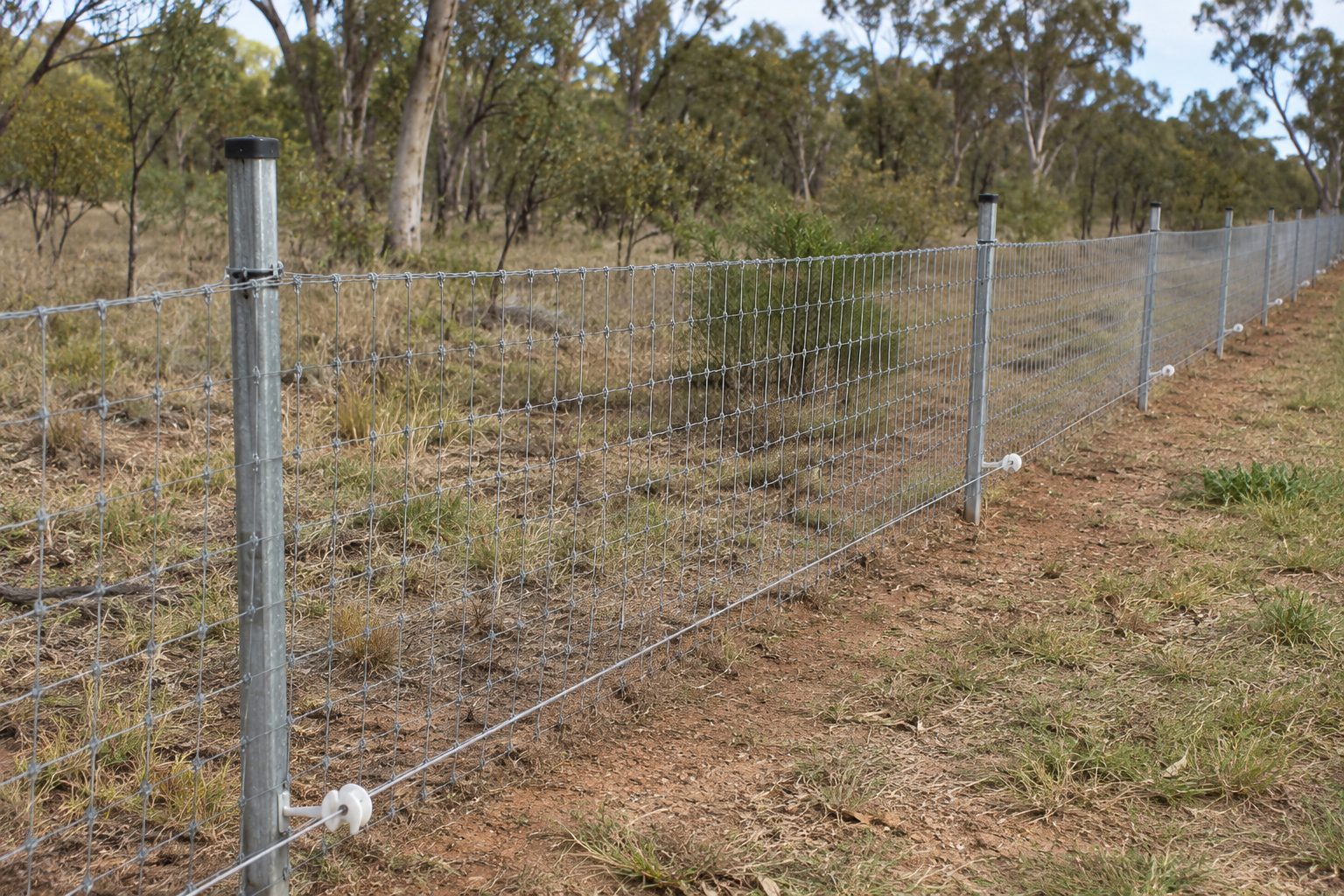
| Mesh | Mesh wire of about 150 mm, secured to the ground. | How the mesh is secured at ground level. |
| Top | Plain or wildlife-friendly wire on top. | Which top wire is proposed. |
| Low wire | Barbed or electric wire 10 to 20 cm off the ground helps stop pigs lifting the netting. | Whether a low wire is included, and whether it is electric. |
A separate regional pig fact sheet, from November 2023, describes electrifying an existing stock fence, for example with outriggers (regional pig exclusion fact sheet). Whether an outrigger suits your existing fence is a question for the contractor. For the energiser and earth, see the electric fencing guide.
Wild dog exclusion: the published design
The same fence selection sheet gives wild dog figures that differ from the pig figures, so a quote for one should not be assumed to suit the other.
| Point | What the fact sheet says |
|---|---|
| Fabricated and netting fences | At least 1500 mm high. |
| Electric fences | A minimum of 950 mm. |
| Low barrier | A barrier below snout level (450 mm). |
| Apron | A fixed or hinged apron or footer to stop burrowing. |
| Gates | Matching the fence height, with no gaps. |
Floods, maintenance and the wet season
The fence selection sheet says to set fencing back from waterways and to build it to handle inundation and debris, placed parallel to the anticipated direction of flood flow, and it says plain wire collects less debris. The pig exclusion sheet says: "Continuous maintenance is needed to repair breaches made in the fence by pigs or other animals, fallen timber and floods". In the wet tropics that means a fence needs checking after rain. The storm and flood page covers repair, and the creeks, roads and vegetation page covers clearing a line.
What to confirm before you order
- Which animal. Pigs, wild dogs or both, because the heights and the low barriers differ.
- The height and the low details. Mesh size, how it is secured to the ground, and any apron or low wire.
- Gates. Whether they match the fence height and leave no gaps.
- Electric or not. What the energiser and earth are, and who maintains them.
- Flood exposure. Where the line crosses low ground, and what the design does there.
- Clearing. Who clears the line and who confirms the vegetation category.
- Licence. Which licence or registration is held. Whether an exclusion fence needs a QBCC licence is not something the pages we found settle, and this site makes no claim either way (see the licence page).
The cost guide lists the lines a quote should itemise. We publish no prices, and the mesh, apron and electric options are different jobs, so quotes should be compared line by line.
What this page cannot do
It cannot design an exclusion fence for your block, tell you whether pigs or wild dogs are a problem where you are, or give a price or a lifespan. The figures are one regional fact sheet's, which says it is general information, and we repeat only those that fact sheet carries. It cannot say which licence or registration a contractor needs, because the pages we found do not settle it. Ask the contractor, the council and QBCC for your block.
Check the current rules before you rely on this
This page describes the pig and wild dog exclusion designs that a regional fact sheet publishes, and what the council's pest listing does and does not say. It describes the rules in general terms as they stood in November 2026. Standards, forms, thresholds and fines change.
The authoritative sources are A regional natural resource management body, fence selection fact sheet, August 2023 (general information, not mandatory standards), A regional natural resource management body, pig exclusion fencing fact sheet, November 2023, A regional natural resource management body, feral pig exclusion fencing in the Mackay Whitsunday Isaac region (web page) and Mackay Regional Council, biosecurity and pest management (lists local pest animals; undated). Where anything here differs from those sources, they are right and we are not.
We are not fencing contractors, builders, regulators or lawyers. For what applies to your fence, ask the contractor which licence or registration they hold and check it on the QBCC register (139 333), then ask the council that covers the land: Mackay Regional Council (1300 622 529), Whitsunday Regional Council (1300 972 753) or Isaac Regional Council (contact details on its website).
Accurate at the time of writing, November 2026. Always check the source before relying on it.